
I heard an interesting take from BNY’s Alicia Levine who underwrote my omission thesis (in this era missing out is far more costly than misinvesting) and pointed out the other side of the coin: inflation.
This is a very interesting and nuanced debate and as someone who continues to argue for supply side driven policy, it’s important to address this point. Supply side windows to leverage a paradigm shift open up occasionally. There’s indeed an inflation cost in the medium to long term if you lean into them to avoid the error of omission. This however is a far more acceptable type of inflation given the opportunity cost.
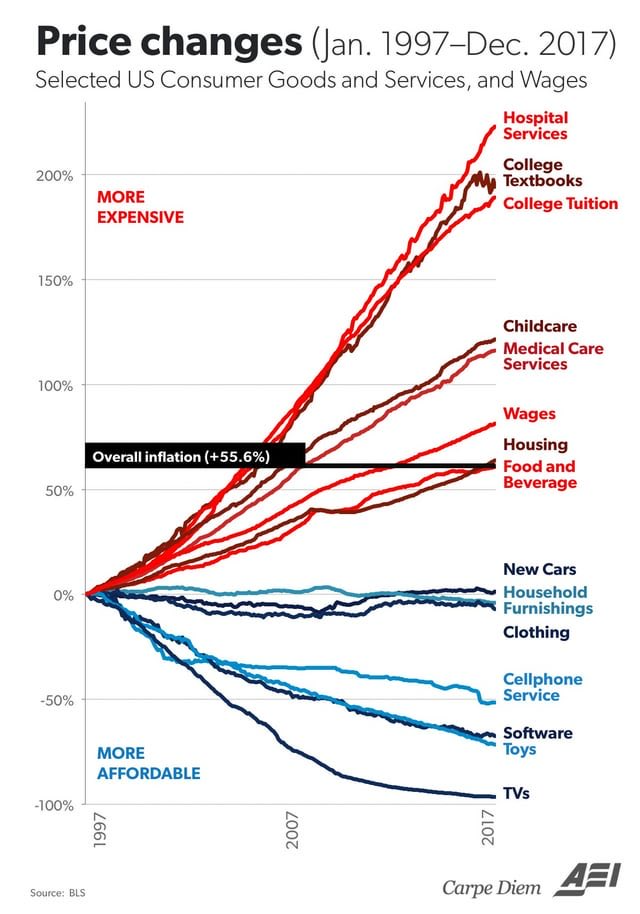
It is however one that really complicates the job of the FED. One the one hand, it needs to keep inflation in check but on the other if it hikes too aggressively, it’ll end up creating a bipolar type of broad economic policy where it’s bogging down a high potential capex cycle. The key nuance and one that feels very hard to address is that, given the current dynamic, we need less focus on the types of goods that are inflationary due to market forces and more focus on goods that are inflationary because of government policy. Think housing, healthcare and education. The FED has little sway there to contain prices. Perhaps somewhat through the mortgage rate effects but little to no tools to combat inflation in healthcare and education.
On this front, we have concrete wins on the slate of this admin: the HOUSING bill and TrumpRx but there’s more needed both on the federal and state level. Take a look at how Texas is balancing this well. Welcoming a significant amount of capex driven investment whilst keeping housing affordable through common sense policy. I would implore policy makers in other states and on the federal to think about this important balance. We need to be more lenient on market driven inflation given the capex opportunity and more strict on the policy driven inflation. This should be the dominant economic policy question of the current era.