
Can one ever truly become the primus inter pares among the entrenched elites? Richard Nixon wrestled with this question in his adolescence and throughout his entire career. His Promethean attempt to overcome it, though having had an unfortunate end, helped build the foundations of the modern Conservative movement. Nixon proved that there’s a place for a Conservative intellectual and operator from modest roots in the highest office. His Presidency however, would tragically uncover that a talented outsider like him would face near mythological levels of manipulation from the establishment. That he and other outsiders like him, would be seen as major threats to the perpetual ancien régime. One constructed to serve the interests of the entrenched elites. Nixon’s ill-fated attempt to fight fire with fire would inform the Conservative moment of what to expect when they regained the Presidency. That Promethean fire he stole at a high personal cost, still burns bright in the Conservative moment. At this historic moment, it feels timely to revisit Richard Nixon the Conservative. To challenge the Olympian telling of his legacy and attempt to understand that, for a Greek among the Romans, the risk of tragedy is non-trivial.
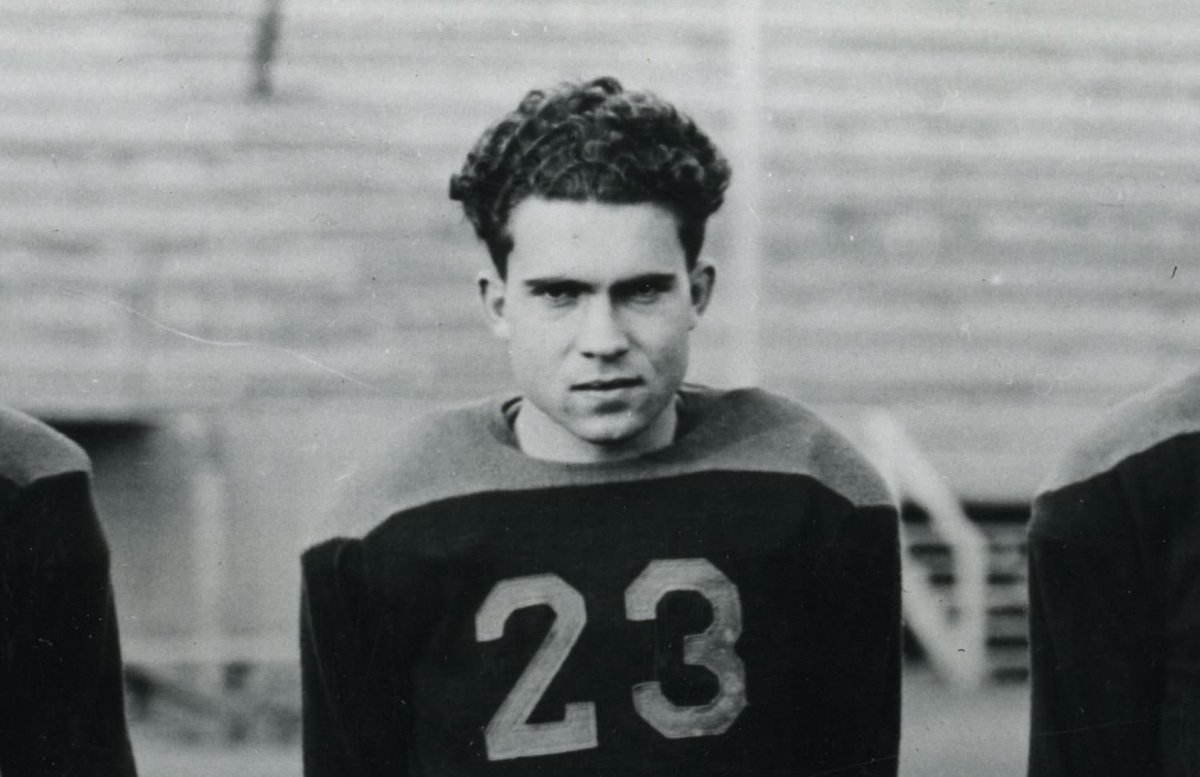
The young Richard Nixon is the embodiment of the fire within. Hailing from modest roots, Richard understands at a young age that a place among the elites will always have to be hard fought. In college, he founded the Orthogononians, a competing student society to the legacy salon that had no place for kids like him. The established elites exert power and influence through institutions. To outmanoeuvre them, you need competing institutions. Richard’s first taste of doing so successfully would shape much of his demeanor when he encountered those entrenched elites at different levels in his career.

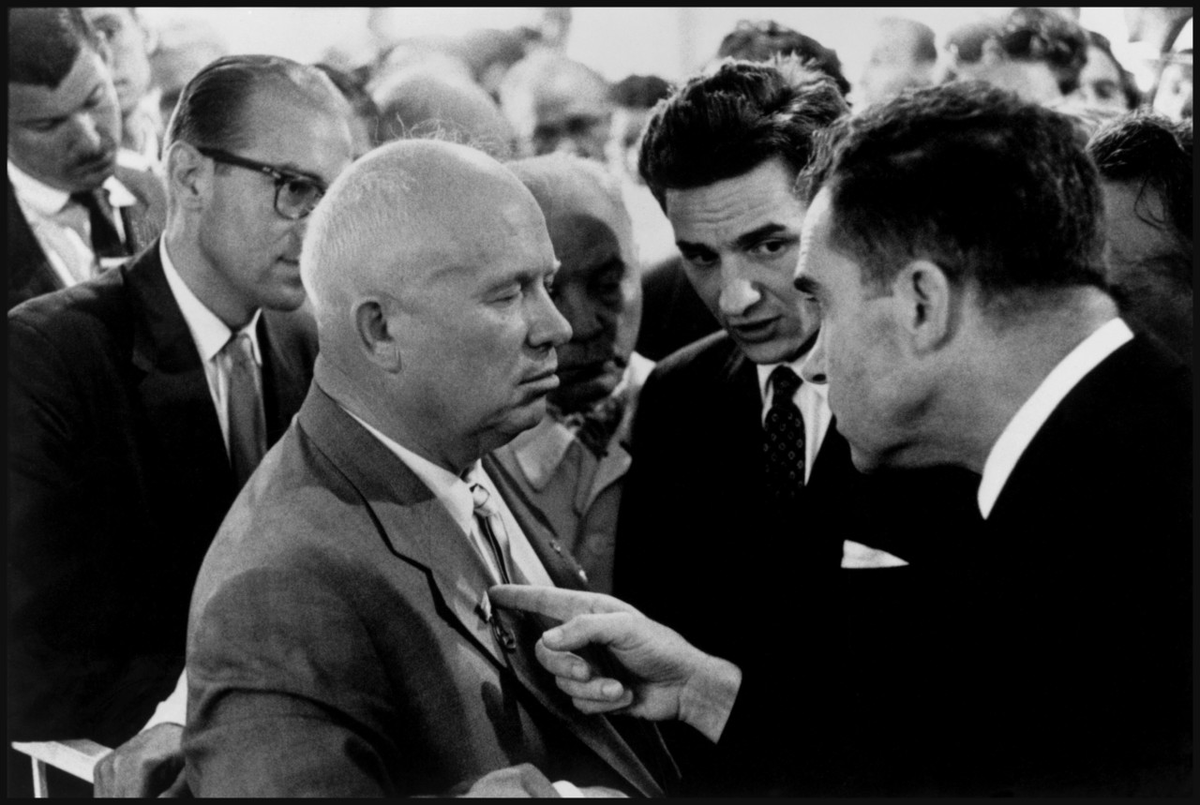
The defining theme in Nixon’s early political career is the domestic fight against Communism. His modest background honed his instinct for opportunity, leading him to become a prominent figure on this key topic in Post-War America. A battle that perfectly fits his instincts as a fighter and his ability to counteract elite complacency. His tireless activism pays off personally, giving him national fame and carrying him all the way to the Vice Presidency. A path bridged by an infamous Senate run where his anti-Communist teeth further reassure Eisenhower that he’ll have a confidant who can help meet the foreign policy challenges posed by the USSR. A dynamic best captured in one of the most iconic pictures of his Vice Presidency: Nixon’s clash with Khrushchev at the 1959 American National Exhibition in Moscow. A reminder of how the WWII veteran really thought about the USSR.

After 8 years of loyal service under Eisenhower, the highest office seemed within reach, were it not for a certain Bostonian. Kennedy is the type of adversary a playwright would conjure to elevate Nixon’s myth. The paradox of a handsome and youthful outsider hailing from a dynasty. Much has been written about the infamous 1960 TV debate. To Nixon, it probably was a stark reminder: elite privilege would show up in unexpected ways to thwart his ambition.
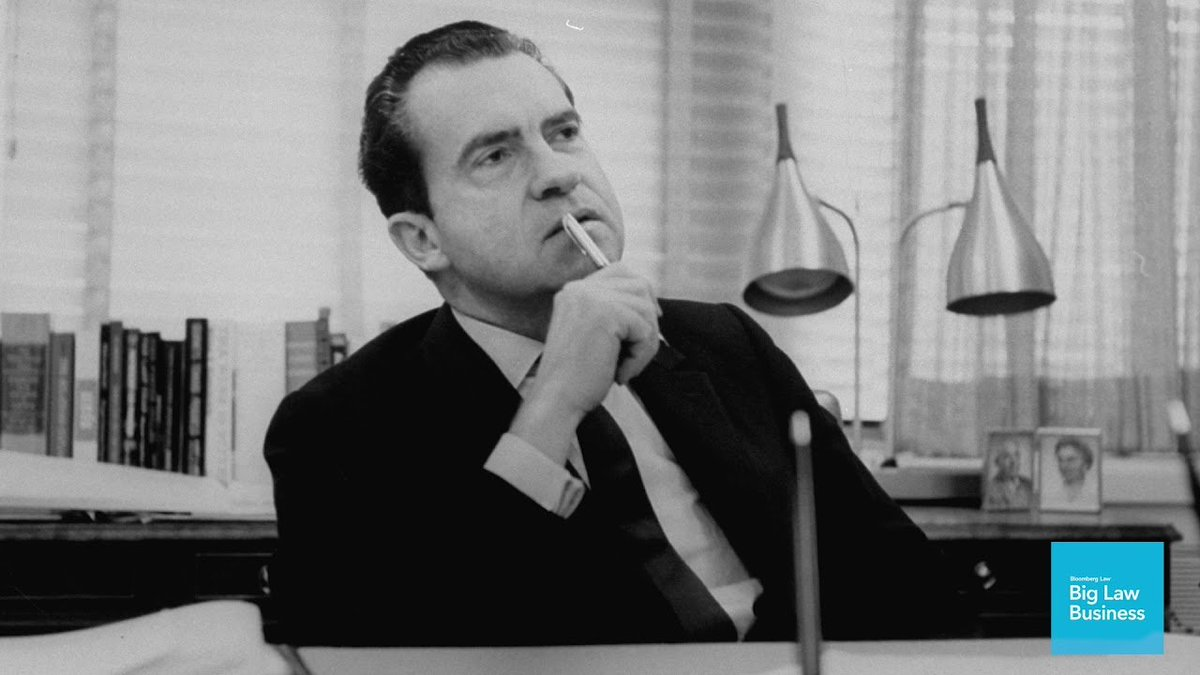
What is under-appreciated about Nixon’s Sisyphean years isn’t what he did but what he didn’t do. One could argue that a lack of self-reflection on his combative ways, shaped by his life experience, paved the way for his future miscalculations. One could also imagine the pain of having come incredibly close to the highest office and having lost to the archetypical adversary Nixon had been fighting his entire career. One however cannot make this assertion about a lack of self-reflection without taking a holistic view and honoring Nixon’s illustrious political career. Without having reverence for the eternal inner fire that carried a young man from a modest background to the centre of national politics in America. Without remembering Nixon the polity man inside the office and out. Without mentioning Nixon, the loyal friend. One who always spoke kindly of Mohammad Reza Pahlavi, the late shah of Iran, even after the 1979 Islamic Revolution. One who struck up a friendship with Donald J. Trump. Seeing a fellow polity man in him, long before he entered politics.

The context of the late 60s when Nixon is sworn into office as President feels near impossible to comprehend if you didn’t conciously live through it. Nixon inherits an incredibly complex cocktail of domestic and foreign issues. From the Vietnam War, the protests against it to the reverberations of the civil rights movement and the aftermath of the Cuban Missile Crisis. The 60s brought with it massive societal change in the US with the advent of the hippie counter culture. A new age movement that went against Nixon’s norms of hard work, religious reverence and patriotism. On top of a highly volatile time and a wide host of challenging issues, Nixon finds himself being thwarted by his own bureaucracy. The recent disclosures around the Radford affair illuminate yet another example of how that bureaucracy was trying to undermine Nixon’s authority by looking for ways to get its hands on highly classified documents.
For Nixon, the experience is not new and he tries to counteract it by centralising decision making around sensitive National Security issues. It doesn’t help. Unfortunately, Nixon subsequently turns to a tried and true approach that helped him throughout his career: counter institution building. Doing so by setting up of the Plumbers, his counter intelligence effort and his attempt to fight fire with fire. The biggest lesson conservatives can draw from Nixon’s struggles during his presidency is that you can’t always trust your first instinct when it comes to institutional manipulation. That as painful as the experience is, one should deploy stoic patience and think through the consequences of taking immediate action against it. Nixon’s demeanor, the highly volatile times and pressure of a large slate of incredibly complex issues probably undermined any chance for reflection during his time in office. Even though Nixon was an intellectual who had agency, he was first.
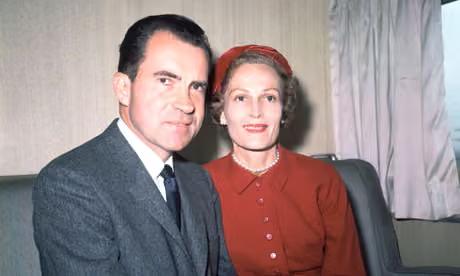
The first intellectual and operator from a modest background to reach the highest office in the modern era. He did not have the benefit of those that went before him. Conservatives who succeeded Nixon however learned from his experience. In Reagan, the Conservative movement found an intellectual in the spirit of Nixon and one who had internalized the nuances of operating among the established elites and the games they play during his time in California. Reagan benefited from Nixon’s legacy on foreign policy through Henry Kissinger who stayed involved in the GOP as a strategic advisor.

One can see Nixon’s influence in the second Trump administration that has multiple intellectual operators who have been making impressive strides in a short amount of time. His influence is visible in how the administration expected institutional pushback and counteracted it. How it came into office with a detailed plan to reshape the Government in its vision and wasted no time getting started. One can see Nixon’s influence in how the late Charlie Kirk built Turning Point USA, the modern equivalent to Nixon’s Orthogononians. Nixon instilled the Conservative movement with a tradition of meritocracy, intellectual rigor and operational wits. He helped lay the foundations for a movement that increasingly attracts the best and brightest. If Nixon were to look back today, he would probably agree that the high price he paid to be a Greek among Romans has been worth it.